Applied Existential Psychotherapy™ (AEP)
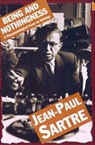

Applied Existential PsychotherapyTM (AEP) is an experiential psychodynamic approach that has been developed and taught at the Boulder Psychotherapy Institute over the past twenty-three years. Its founder is Dr. Betty Cannon, BPI President. AEP interlaces the insights of existential philosophy and contemporary psychoanalysis with techniques drawn from Gestalt therapy and other experiential approaches. It is a dynamic here-and-now therapy that also takes into account how the past impacts the present. AEP works deeply with the body and process as well as verbal material and content. Betty Cannon's book, Sartre and Psychoanalysis, is considered a classic in the field of existential psychology.
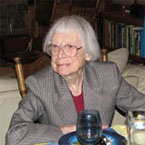
AEP is strongly influenced by the work of French existential philosopher, Jean-Paul Sartre. Betty's mentor and friend, Hazel E. Barnes, translated Sartre's Being and Nothingness and Search for a Method into English. Hazel is the person considered most responsible for bringing existentialism to the English-speaking world both through her translations and through her books, articles, and media presentations. She was a renowned scholar and beloved teacher at the University of Colorado for many years. The most prestigious award for faculty teaching and research is given each year at CU in her name. Betty is her literary executor. Read about Hazel's contributions to existential psychology in Betty's memorial essay: Hazel E. Barnes 1915-2008: A Farewell to America's Foremost Sartre Scholar.
PUBLICATIONS ON AEP
Betty Cannon is the author of numerous journal articles and chapters and an internationally recognized book on existential therapy.
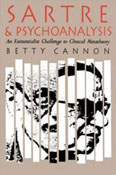
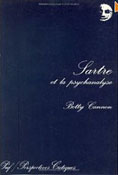
Betty's book, Sartre and Psychoanalysis (University Press of Kansas, 1991; French translation Presses Universitaires de France, 1993), received international acclaim and is considered a classic in the field. Ernesto Spinelli, author of Tales of Un-knowing and other influential books on existential therapy, has this to say about it:
"Every once in a rare while a text comes along whose intellectual impact is such that it makes one want to shout: 'Please, whatever you do, READ THIS BOOK!' Betty Cannon's Sartre and Psychoanalysis is such a book... Her arguments and conclusions, as well as being stunningly original, light not only upon psychoanalytic practice, but (if implicitly) upon psychotherapeutic practice in general... I cannot praise this book too highly. For anyone interested in existential analysis, and most especially anyone practising such, Cannon's text is required reading. Thankfully, it is also pleasurable and eloquent reading, admirable for its clarity, authority and lack of academic pretension. In other words: a text destined to become a classic in the field."
–Ernesto Spinelli, Existential Analysis, July-Sept. 1992, no. 3.
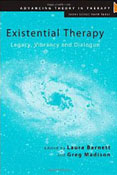
Betty has a chapter in a new book, Existential Therapy: Legacy, Vibrancy and Dialogue, edited by Lauara Barnett and Greg Madison (Routledge, 2011). Her chapter is called "Applied Existential Psychotherapy: An Experiential Psychodynamic Approach." The book has been compared to Rollo May's epochal volume, Existence. Robert Stolorow, founder of Intersubjective Psychoanalysis and author of Trauma, Heidegger and Post-Cartesian Psychoanalysis, has this to say about the it:
"This volume, whose list of contributors reads like 'Who's Who' in existential therapy, will leave the reader with no doubts about the influence and vitality of the existential tradition in a plurality of contemporary psychotherapeutic approaches. The book is a marvelous feast for anyone with a taste for the existential."
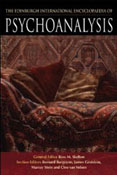
Betty is the executive editor for the section on "Existential Psychoanalysis" for the prestigious Edinburgh International of Psychoanalysis (Edinburgh University Press, 2006), general editor Ross Skelton. Betty contributed many entries, including the overview of Existential Psychoanalysis.
Betty is a member of the editorial boards of three professional journals: Sartre Studies International, Review of Existential Psychology and Psychiatry, and Existential Analysis..
She also has chapters and articles in many other books and journals. (See her BPI Therapist Directory page for a full bibliography.)

FORTHCOMING BOOKS AND WORK-IN-PROGRESS ON AEP

- Betty Cannon, BPI President, Reed Lindberg, BPI Managing Director, and Robyn Chauvin, BPI Senior Teaching Faculty, are currently writing a book on the theory and practice of Applied Existential Psychotherapy.
- Reed Lindberg and Betty Cannon have a chapter coming out in a new book on Existential Couples Therapy, edited by Emmy van Deurzen and Susan Iacovou: "Being Yourself While Being with another: Bad Faith and the Couple's Dilemma."
- Betty Cannon has a new chapter coming out in Sartre: Key Concepts, edited by Jack Reynolds and Steven Churchill: "Psychoanalysis and Existential Psychoanalysis."
- Robyn Chauvin is working on a book on Gender Construction and Freedom: An AEP Approach.
AEP VIDEOS

Check out other AEP Videos here. These are public videos of AEP and related topics. Class videos are available by password on another channel for students taking trainings in AEP.